Towards a Greener Healthcare System

GREENING THE HEART OF HEALTHCARE
On a global average basis, healthcare systems account for over 4% of global CO2 emissions. According to the World Economic Forum, for most industrialised nations, that figure is closer to 10% of national emissions.
That is more than the aviation or shipping sectors. As an industry, that includes health technology companies, healthcare systems, and other stakeholders, It is time to extend the principle of “first, do no harm” – the very foundation of healthcare – to the planet.
Collaboration is vital to drive sustainable change and deliver on the Paris Agreement climate goals, especially in a complex sector like healthcare.
By working together with customers, peers and partners across the value chain, we can help reduce our collective carbon footprint – and so leave a healthier planet, and a more resilient and sustainable healthcare industry, for future generations.
Taking this approach seriously, the National Heart Institute (Institut Jantung Negara, or IJN) is at the forefront of this shift in Malaysia, spearheading numerous environmental, social, and governance (ESG) initiatives.
BusinessToday recently spoke with IJN Holdings Group Chief Executive Officer, Professor Dato’ Sri Dr. Mohamed Ezani Md Taib, to discuss how the Institute addresses its environmental footprint and contributes to Malaysia’s national goal of achieving net-zero carbon emissions by 2050.

GREENING THE HEART OF HEALTHCARE
Healthcare facilities are energy-intensive, with substantial carbon footprints due to high energy consumption and waste generation.
Being a leading medical centre, IJN is a major consumer of energy, averaging at around 22,000 MWh per year. Given that it has no choice but to use energy, several novel initiatives have been put in place to reduce the impact of energy demand on the environment
“We’ve invested millions in solar panels, which now power all our outdoor lighting, significantly reducing energy costs,” said Dr. Ezani.
Rainwater harvesting systems have been installed for landscape irrigation and non-potable uses, and the Institute’s newly designed surau incorporates green features, relying heavily on solar energy and rainwater.
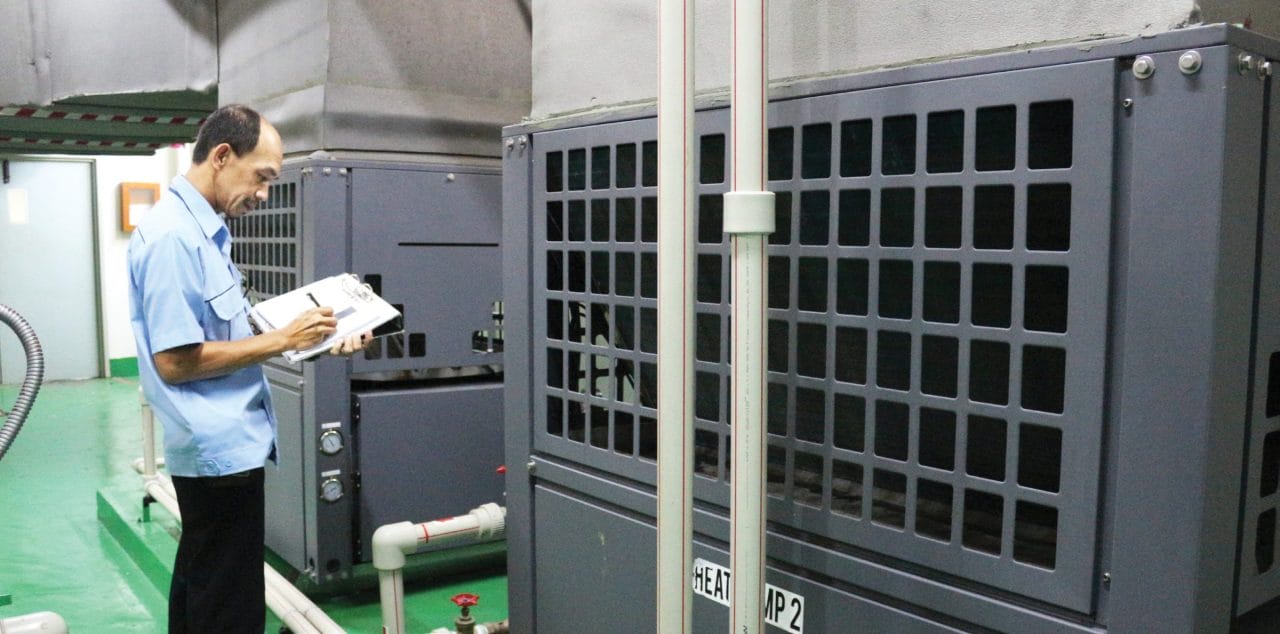
IJN’s energy-saving initiatives also include transitioning to LED lighting, replacing over 13,000 bulbs, and adopting heat pump systems for hot water needs.
These changes have collectively saved IJN approximately RM450,000 annually in energy costs. “We aim to achieve a 10% reduction in energy usage, and with solar installations on new building rooftops, we’re well on track,” Dr. Ezani added.
One such solution can be found on its roofs. Located on the top of IJN’s Block B, and comprising 1,038 modules, IJN’s very own solar power generator has been doing its part to alleviate the amount of energy it takes from the main power grid.

Having commenced in December 2020, the installation of the solar panels was completed in May 2021, and cost around RM1.66 million. Presently, the solar panels produce 400,000 kWh of electricity per year.
This accounts for around 2% of IJN’s energy consumption, allowing for a reduction of reliance on coal and gas-fired energy. Despite this being a small contribution but the significance of its contribution is undeniable.
Rooftop solar panels emit around 41 grammes of CO2 equivalent emissions per kilowatt of electricity generated, compared with 490 grammes.
MANAGING WASTE RESPONSIBLY
Hospitals generate vast amounts of waste, including hazardous materials. IJN has introduced rigorous waste segregation practices to distinguish between clinical and general waste, significantly reducing the volume of clinical waste.

Recycling efforts focus on plastic and aluminium, while kitchen waste is composted to create fertilizer for a community garden. This green initiative not only reduces waste but also produces fresh vegetables for staff use.
Another noteworthy development is IJN’s move away from disposable materials. Inspired by European models, the Institute is considering reintroducing washable linens and cloth masks, which are more sustainable alternatives to single-use items.
DRIVING CHANGE THROUGH INNOVATION AND ACCESSIBILITY
IJN’s commitment to sustainability extends to patient care and accessibility. The IJN Care app minimises unnecessary travel by providing patients with remote access to medical information. The nearby MRT station and electric buggy services offer eco-friendly transportation options for those visiting the facility.
Additionally, IJN has repurposed adjacent land into a “net-zero zone,” utilising kitchen compost and reclaimed wooden pallets to cultivate a sustainable space. This area is emblematic of the Institute’s dedication to fostering environmental stewardship within the community.
SOCIAL RESPONSIBILITY AND COMMUNITY ENGAGEMENT
IJN’s ESG efforts aren’t confined to environmental initiatives. The Institute’s CSR programs include free health screenings across underserved communities, with over 70,000 individuals screened at 174 locations to date.
Internally, IJN supports its staff with food banks, affordable meals through its Menu Rahmah initiative, and low-interest loans, ensuring their well-being while promoting social equity.
LEADING BY EXAMPLE
IJN’s commitment to energy security is further reflected in the fact that it was the first hospital to receive 1-Star Energy Management Gold Standard (EMGS) certification in December 2015.
This is a certification under the ASEAN Energy Management Scheme (AEMAS), and receiving the 1-Star rating affirmed that IJN has implemented effective energy management.

In 2017, IJN became the first hospital to receive a 2-Star rating under EMGS, in recognition of it having a minimum of 5% annual energy reduction from the baseline requirement. And then in 2019, it became the first hospital to receive a 3-Star rating, which recognises its focus in improving and sustaining energy reduction.
“For new facilities, we are aiming for LEED Platinum certification, prioritising the use of natural sunlight, rainwater harvesting, and optimised air conditioning systems,” added Professor Dato’ Sri Dr. Mohamed Ezani who noted that IJN’s commitment to green practices not only enhances its operations but also sets a benchmark for others in the industry.
CHALLENGES AND FUTURE GOALS
While the road to sustainability is fraught with challenges—particularly the high capital expenditure of retrofitting older facilities—IJN remains resolute.
“The initial costs are high, but the long-term savings and environmental benefits outweigh them,” noted Dr. Ezani. Moreover, IJN is holding its suppliers accountable, gradually imposing sustainability requirements on local vendors to align with global best practices.
EMPOWERING CHANGE
Dr. Ezani emphasised the importance of collective responsibility in achieving sustainability goals. “The public must take charge of their health through preventive measures and healthier lifestyles, reducing the strain on healthcare services,” he said.
For healthcare providers, he urged a focus on optimising resources like water and sunlight to create environmentally conscious facilities.
IJN has its own energy policy drafted out, ensuring the hospital is committed to consuming energy in the most efficient, safe, economical and environmentally responsible way to minimise wastage.
Apply a good energy management system that requires compliance with laws, regulations and standards for energy management. Raising staff awareness and commitment to reduce energy consumption.
IJN also vows to operate responsibly by applying the best knowledge and technology on energy efficiency, conduct regular review of energy efficiency data and benchmark with the best within the industry. Continuously improve the design, operation and maintenance practices by investing in good returns initiatives.
THE PATH TO NET ZERO
Looking ahead, IJN is optimistic about achieving net-zero emissions by 2050. “We’re on the right track, and it’s all about maintaining discipline,” Dr. Ezani concluded. With its holistic approach to ESG and sustainability, IJN is not only safeguarding the planet but also reinforcing its role as a leader in healthcare innovation.
As a model institution, IJN exemplifies how sustainability and healthcare can work together to create a healthier future for both people and the planet.
Related
link