3 ways Johnson & Johnson is helping make healthcare more sustainable
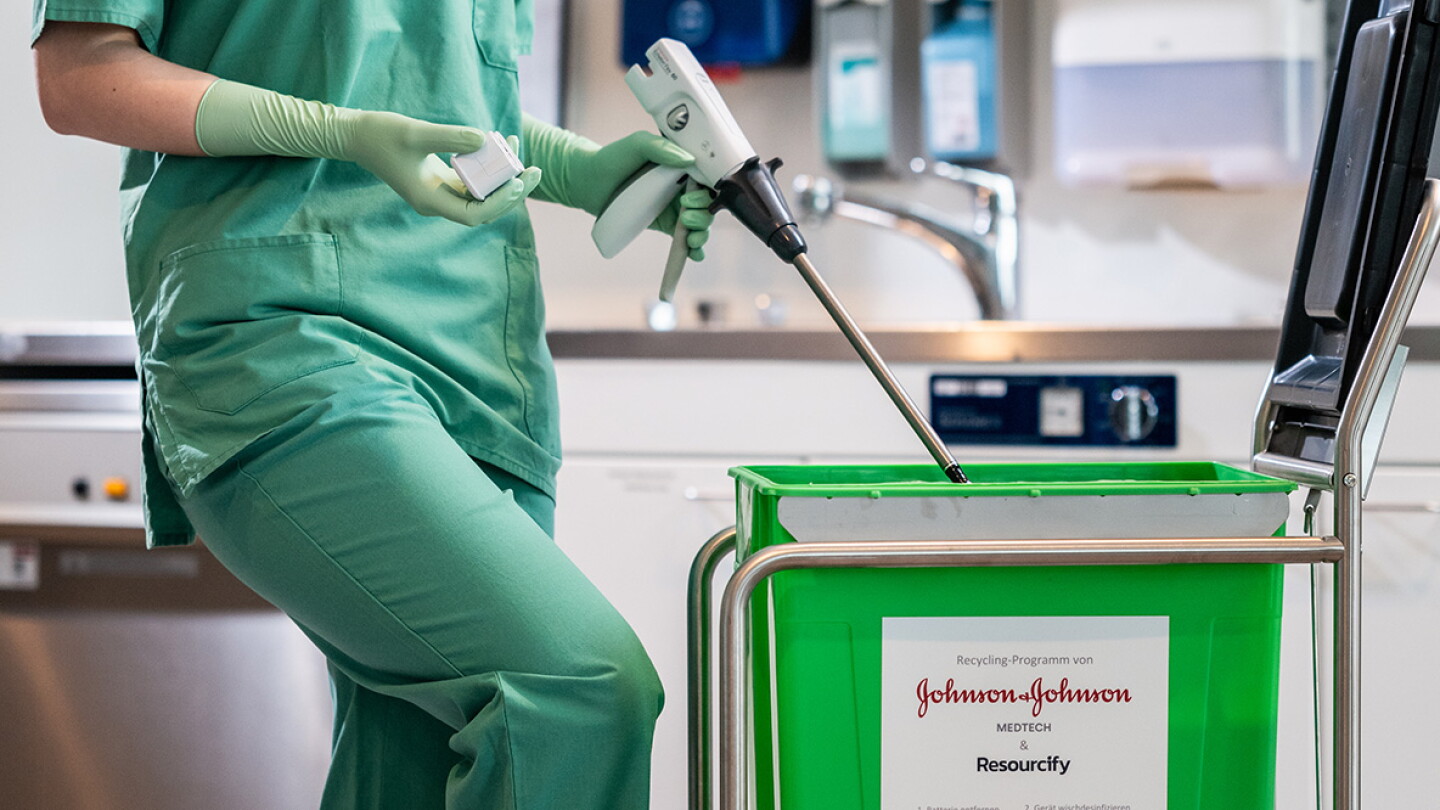
In hospitals, single-use medical instruments (which can include needles, surgical instruments, catheters and endoscopes) are used once per patient and then disposed of—eliminating the potential for cross-contamination from patient to patient and reducing time spent on cleaning and sterilizing.
But since they’re also sent straight to landfills or incinerators after use, these items can create a large amount of waste each day.
Johnson & Johnson’s single-use
medical device recycling program is aiming to change that.
In 2021 and 2022, components from more than 25,000 single-use products were recycled through Johnson & Johnson’s program—and numbers are expected to grow.
The program, which started in New Zealand in 2018 and then piloted in Germany in 2020, allows hospitals to recycle specific metal and plastic components from some Johnson & Johnson MedTech single-use instruments, as well as absorbable suture aluminum-based packaging.
“Many surgeons and nurses were seeing the impact of single-use instruments on the environment and were also concerned about the valuable materials they’re made of, which were being used once and discarded,” says Unger, who helped develop the recycling program in Germany. For him and his team, the question was: Can we treat these devices differently and is it feasible?
They have proven that the answer is yes. Thanks to this program—which has expanded to Switzerland, the Netherlands, Norway, Belgium, Sweden, the UK and Austria with plans to expand further—some highly valuable materials such as surgical steel, aluminum and chrome, as well as specific plastics, can be recycled, keeping them in the circular economy where these materials can be used to create new non-medical products. “We started the program in Europe focusing on two Johnson & Johnson MedTech products, and continue to add more products to recycle,” Unger says.
Hospitals are also digitally capturing and communicating the environmental impact of salvaging these materials: In 2021 and 2022, components from more than 25,000 single-use products were recycled through the program—and the numbers are expected to grow as more hospitals participate in this program.
Recycling these single-use medical devices not only lightens the load at incinerators and landfills and repurposes valuable materials, it also saves hospitals from spending money on waste-removal fees.
Beyond recycling medical devices, Unger is working with other teams to explore how to incorporate sustainable practices into product design. “We need to revise how we design a product so that less waste is produced during the beginning of its life cycle,” he continues. “Expectations are getting higher and higher, and our aim is to provide customers with more environmentally friendly products when possible.”
link